Expertise
Solar on a flat commercial roof: what to check before you start
Before panels go on a flat commercial roof, five things need answers: the condition of the roof, whether the structure can carry the system, how the frames are held down, where the existing equipment and service routes are, and how the cables reach the switchboard. Settle these first and the quote becomes accurate.
5 min read
On this page
Roof condition and remaining life
Panels stay on the roof for a long time. If the roof membrane is near the end of its life, it is cheaper to renew it before the installation than to lift the panels later. Ask the roofer to inspect it and to say how long it should last.
Check the drainage as well. Blocked outlets and ponding water should be fixed first, because panels and frames make later repairs harder.
The roofer can also tell you which parts of the roof are weak, and where the walkways and drains are, so the layout of the system avoids them. If the roof is renewed first, ask that the new membrane is compatible with the chosen mounting.
Can the structure carry it?
Panels, frames and ballast add weight, and wind adds forces on top. Whether the building can take that is a question for a structural engineer, who checks the roof structure and gives a written answer.
We do not guess at this. If the engineer limits the load, the layout can be changed, for example by spreading the system out or choosing a lighter mounting.
Ask for the result in a form that you can pass on: a short statement, with the conditions that apply, such as the areas where weight is allowed. Keep it with the project file.
Ballasted frames or fixed anchoring
On a flat roof, panels are usually mounted on tilted frames. The frames are either held down by ballast, such as concrete blocks, or fixed to the structure with anchors.
Ballast avoids penetrating the membrane, but adds weight. Anchoring adds less weight, but each fixing passes through the roof layers and needs a proper seal. Penetrations matter because the roofer's warranty may depend on how the membrane is treated, so involve the roofer in the choice.
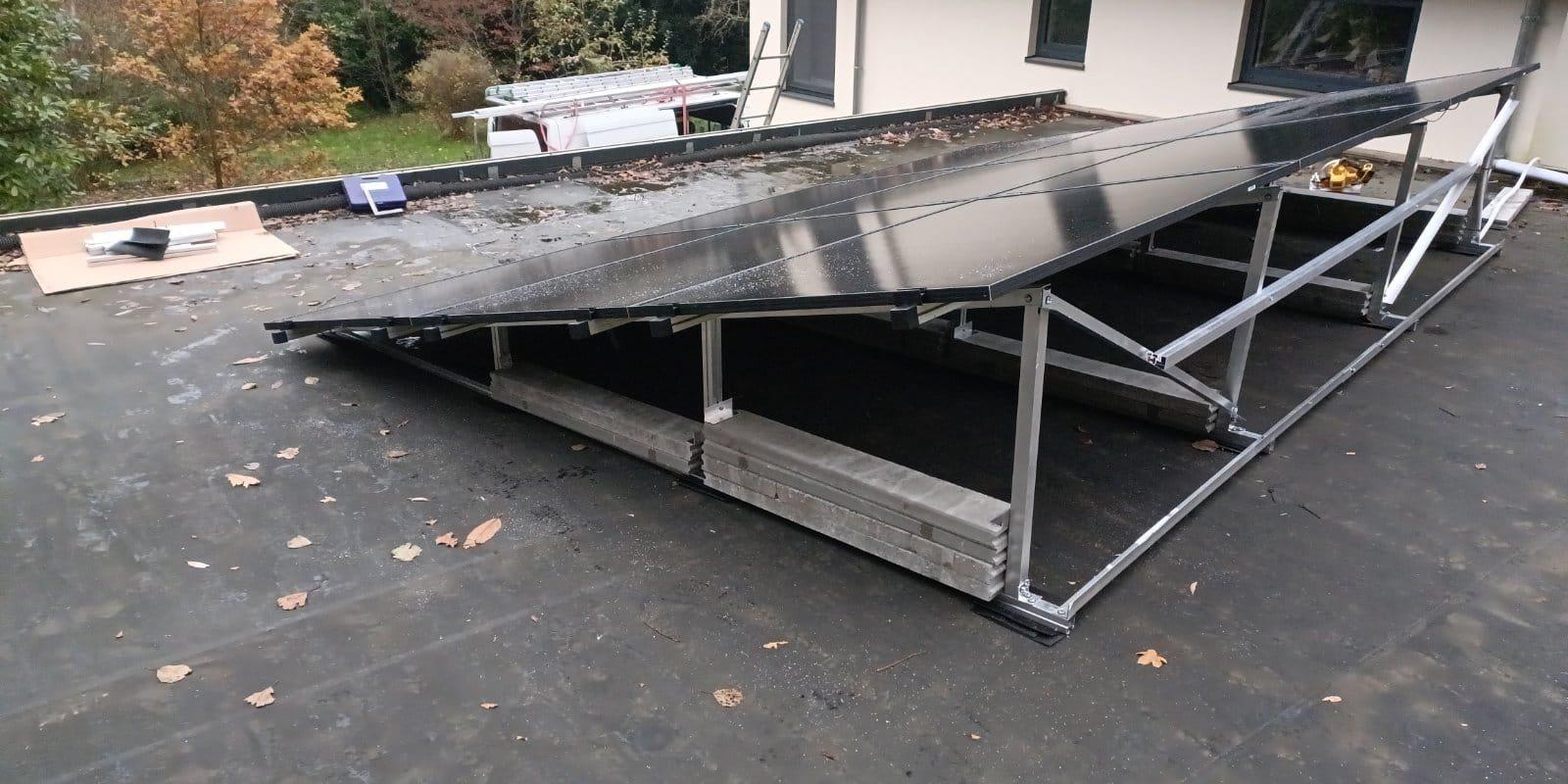
Wind, equipment and service access
Wind exposure changes with the height of the building, the edges of the roof and the surroundings. Edge zones and corners usually need extra care, and the structural engineer or the system designer decides how.
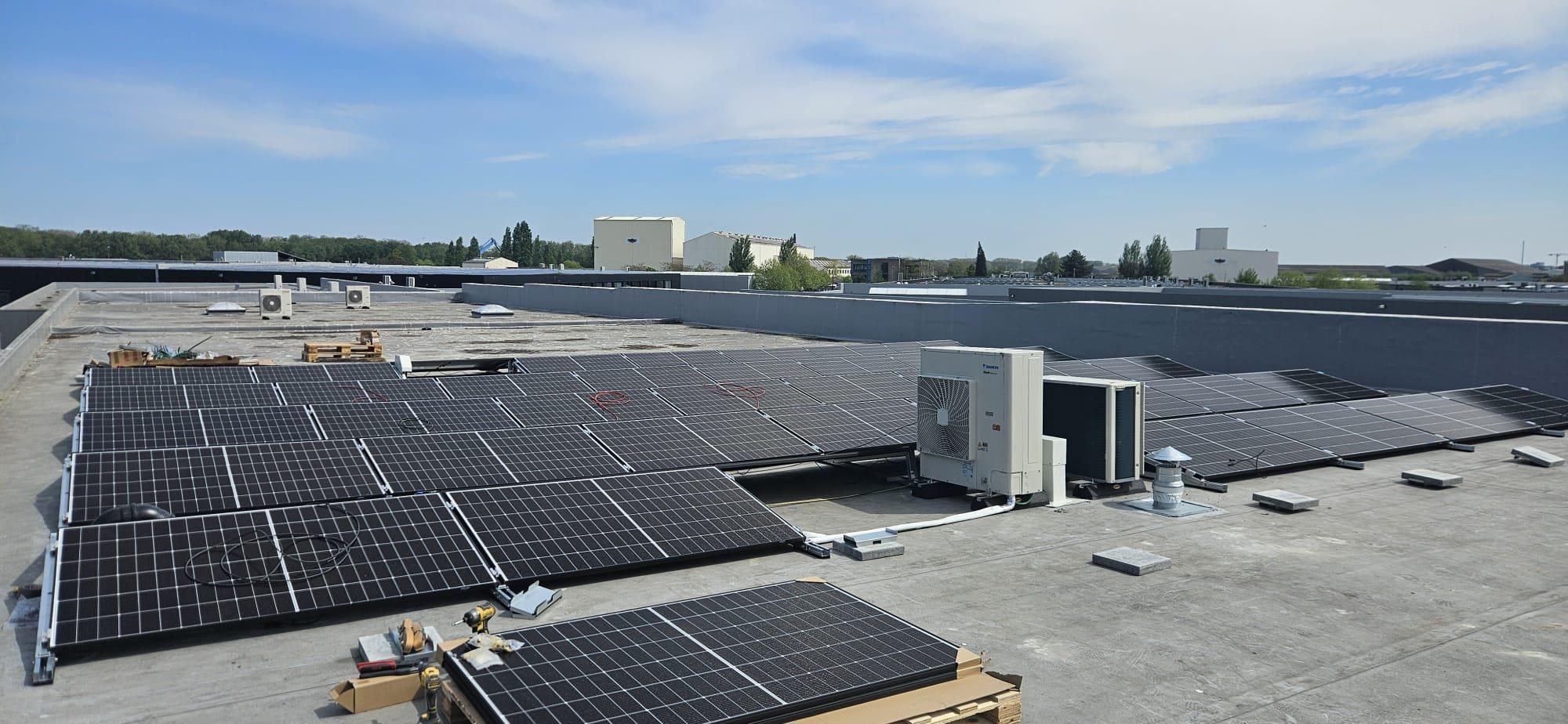
Existing rooftop equipment, such as HVAC units, skylights and vents, must keep working and stay serviceable. Plan clear walkways and working space around each unit, and keep panels out of exhaust paths. We plan systems around existing rooftop equipment, not on top of it.
Think about the people who service the roof as well. Cleaning crews, HVAC technicians and roofers need to reach their equipment without walking across the array or stepping over cables.
Cables, inverter, grid and storage
Decide early where the inverter and the cable route will go. A short, protected route from the roof down to the inverter and the main switchboard saves work and reduces the chance of damage.
The grid connection is agreed with the network operator and may limit the size of the system. If you want battery storage, say so at the start, because it affects the inverter choice and the space needed.
Consider the route inside the building too. It should be protected, accessible and clear of other services, which is where coordination with the electrical contractor pays off.
Safe access during the work
A flat roof looks safe, but the edges are a fall hazard. The work needs edge protection or equivalent measures, safe access for people and for materials, and a plan for lifting panels to the roof.
This belongs in the safety plan for the job, and the site owner should know which parts of the roof are closed while the crew is working.
Weather matters. Panels act as sails during lifting, so the crew plans the days and the method around wind.
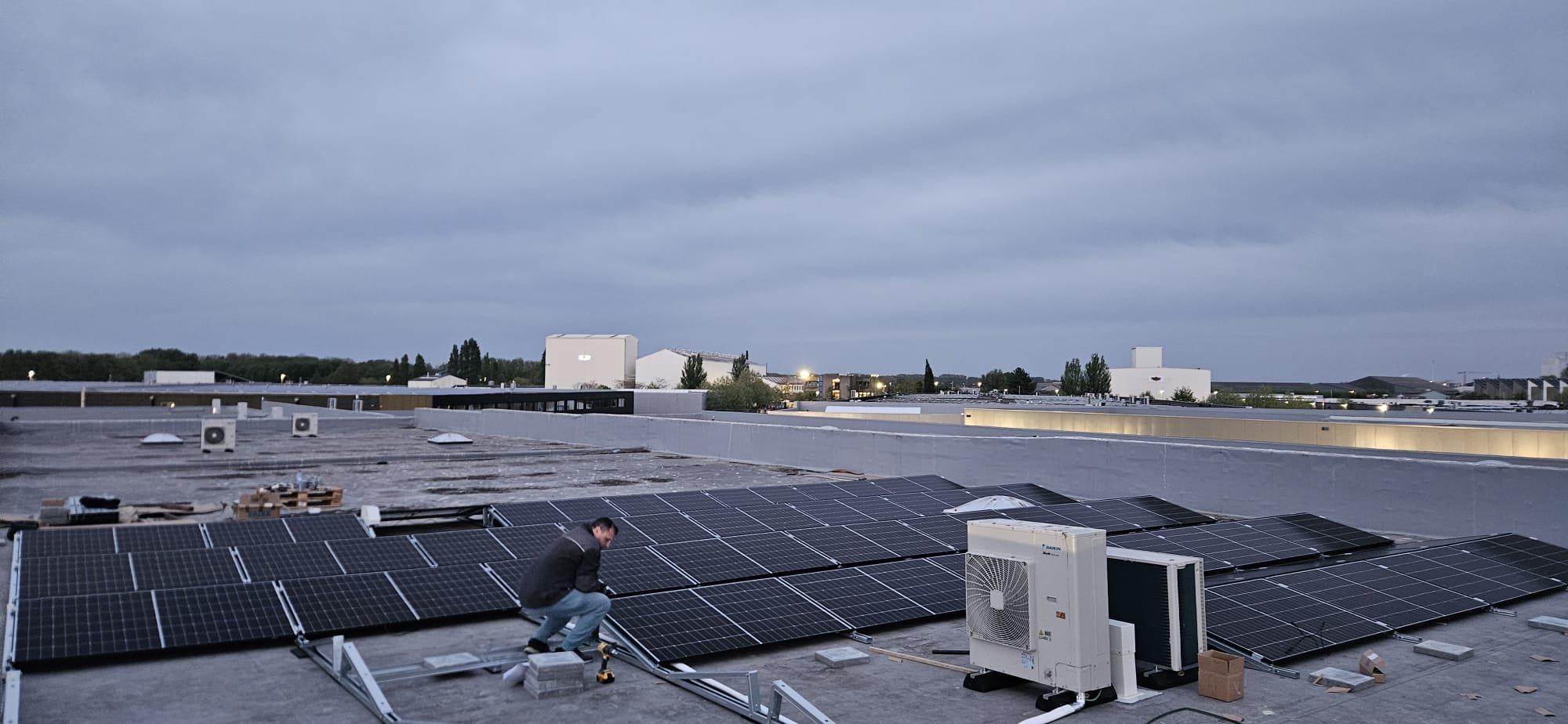
What to send for a quote, and who we are
To quote accurately, send roof plans or photos, the roof type and age, the position of the equipment on the roof, the location of the switchboard, and your energy goals. Tell us if you want storage.
I.G. Solutions installs solar on flat and pitched roofs and on ground-mounted structures, and coordinates the scope from mounting to inverters and cabling. If an engineer or roofer must sign off first, we will tell you what to ask them.
Photos taken at roof level, with the equipment and the roof edges visible, often answer more questions than a long description.
Frequently asked questions
Do I need a structural engineer for a flat-roof solar system?
In most cases, yes. Panels, frames and ballast add weight, and wind adds forces. A structural engineer confirms in writing whether the roof can carry the system and may limit the layout.
Is ballast better than fixing frames to the roof?
Neither is always better. Ballast avoids penetrating the membrane but adds weight. Anchoring adds less weight but needs sealed fixings. The structure, the roof type and the roofer's warranty decide which fits.
Can panels go around existing HVAC units?
Yes. The system is planned around rooftop equipment, with walkways and working space left for service. Panels are kept out of exhaust paths and away from access hatches, skylights and vents.