Expertise
One contractor for three trades or three: what changes on site
When electrical, ventilation and sanitary work share the same ceilings and shafts, the problems sit between the trades. One contractor with its own crews settles those problems in one plan. Three subcontractors can also work well, but someone must coordinate them. The choice depends on size and specialisation.
5 min read
On this page
Where the trades meet
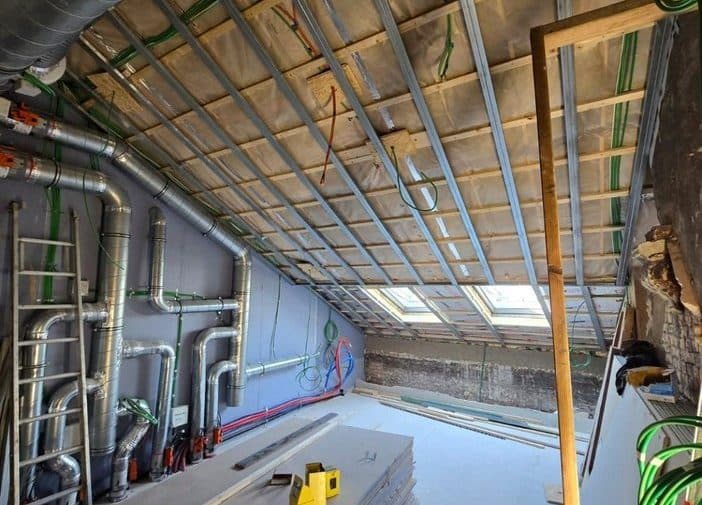
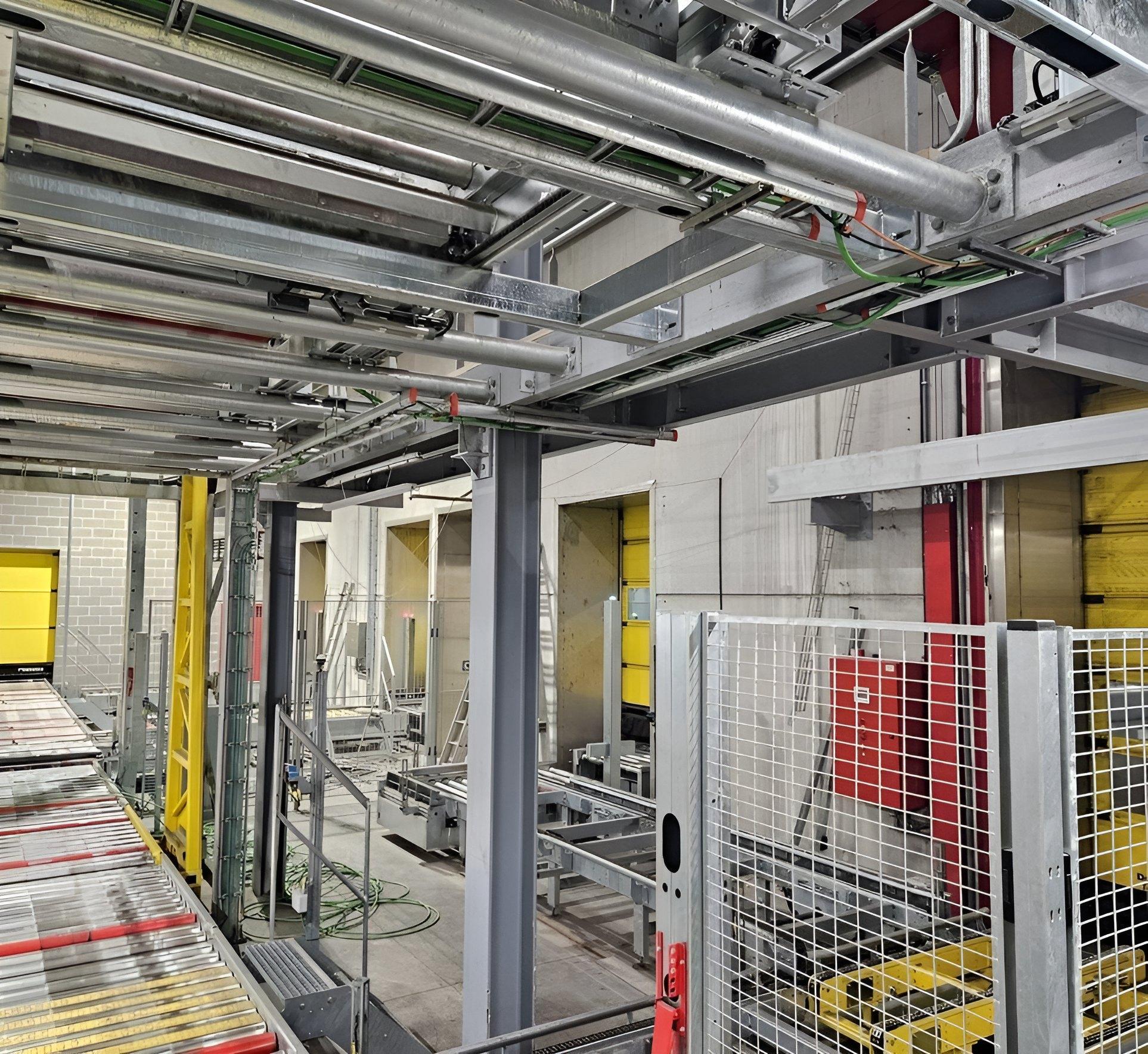
Electrical, ventilation and sanitary installations compete for the same space. Ducts are large and need a straight path. Drainage pipes need a fall. Cable trays need access. All of them need room above the ceiling and along the shafts.
Problems rarely come from one trade doing poor work. They come from the interfaces: two trades planning the same route, or one trade closing a ceiling before another has finished.
Add the fact that every installation must be reachable later. Filters, valves, dampers and junction boxes all need to be opened, read or replaced. A ceiling that looks neat but hides a valve behind a duct is a maintenance problem for the life of the building.
The sequence that makes it work
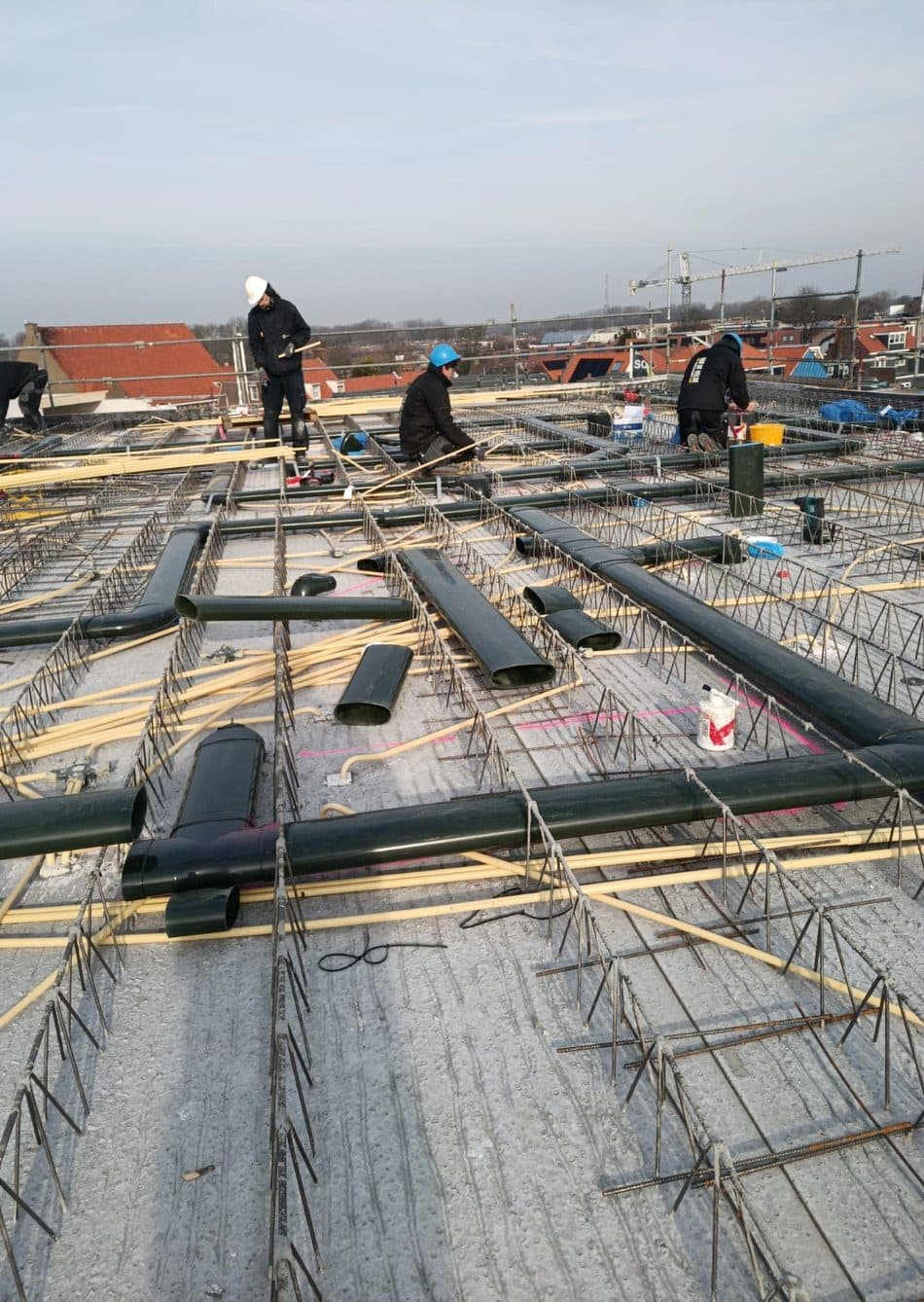
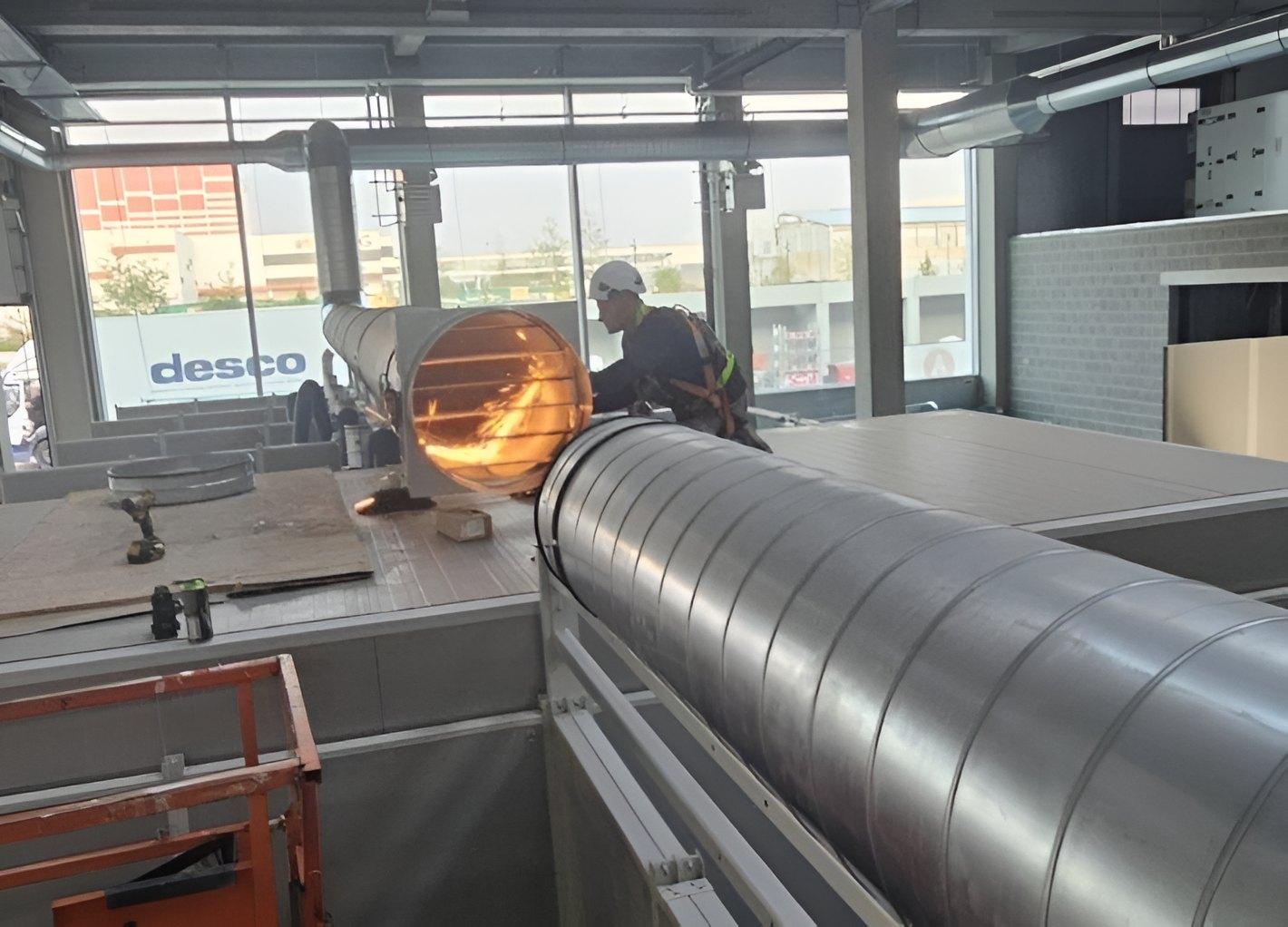
A sensible order follows the size and rigidity of the system. Ducts usually go first because they are bulky and cannot bend around obstacles. Large pipes follow, then smaller pipes, then cable trays and cables. The exact order is agreed on site for each zone.
Equipment that needs service access, such as dampers, valves and junction boxes, must keep a clear zone. If that zone is not planned, the ceiling tiles become the only access, and they are in the wrong place.
Routing comes before installation. A short coordination exercise on the drawings, followed by a check on site, is cheaper than moving pipes after they are fixed.
One schedule instead of three
With three subcontractors, each has its own programme and its own priorities. The main contractor or project manager has to align them, and every delay in one trade moves the others.
With one contractor, the crews belong to the same company. Who waits for whom is decided in one plan. If the ductwork slips, the electrical crew can be moved to another zone instead of standing idle.
A single schedule also changes how delays are discussed. There is one plan, and one person who can say which trade moves when. You do not have to compare three versions of the truth.
Clashes, contact and invoice
On a multi-trade site, a clash between a duct and a cable tray is settled between two crews of the same firm, often on the same day. Between separate firms, it often becomes a question of who must move, who pays and who signs.
You also get one point of contact and one invoice. That reduces administration, and it means fewer people to chase when something is missing.
It also helps when something does not work after handover. With several firms, each may point at another. With one contractor, there is one party to call and one party responsible for finding the cause.
When separate specialists still make sense
A multi-trade contractor is not always the right answer. Very large packages may exceed one company's capacity. Highly specialised work, such as a complex process installation, may call for a dedicated specialist.
Even then, the interface planning is still needed. The question is who owns it: the main contractor, a coordinator, or the multi-trade contractor for its own part of the work.
A middle route exists: appoint the multi-trade contractor for the standard installations, and a specialist for the one demanding package, with a clear interface list between them.
Questions to ask a multi-trade contractor
Not every company that offers several trades has its own crews for each. Ask before you sign.
The answers do not have to be perfect. They should be specific. A contractor who names the site manager and shows the planning method is in a better position than one who says everything is coordinated.
- Are the trades carried out by your own crews or by subcontractors?
- Who coordinates between the trades on site, and by name?
- How is the sequence planned, and who sees the plan?
- How is access to equipment kept clear for later maintenance?
- What does the invoice look like, and does it cover all trades?
How we plan it
I.G. Solutions carries out electrical, ventilation and sanitary work with its own crews. We plan in four steps: routing, interfaces, programme and maintenance access. Service corridors and ceiling zones are agreed before installation, and future access to equipment is protected.
You get one team, one schedule and one invoice. If you have drawings, send them, and we will tell you where we see interface problems before the work starts.
Frequently asked questions
Is one contractor for three trades always better?
Not always. It works well for packages that one company can staff and where the trades share space. Very large or highly specialised packages may need separate specialists. Either way, someone must own the interface planning.
Which trade goes first above a ceiling?
Usually ductwork, because ducts are large and cannot bend around obstacles. Large pipes follow, then smaller pipes, then cable trays and cables. The actual order is agreed on site, together with the access zones for equipment.
How do I check a contractor really has its own crews?
Ask who carries out each trade, who supervises it on site and how the crews are scheduled. A contractor with its own crews can name the supervisors and show one plan for all trades.