Expertise
Replacing ductwork in a production hall that keeps running
Replacing ductwork in a running hall works when the job is split into small phases, each with its own isolated section, exclusion zone and handover. The plan comes first: what is removed, what is added, when each air handling unit or fan can be stopped, and how people below stay safe.
5 min read
On this page
Survey and marking
Start with a survey of the existing system. Walk the routes, note the supports, and mark every section as remove, keep, modify or new. The marking should be on drawings and on the ducts themselves, so that the crew and the site agree on what is happening.
Check what else is connected: branches, dampers, extraction points and equipment. A duct that looks isolated often feeds something.
Photograph each section before it is touched. The photos help the site, the crew and the person who writes the handover record.
Note also what the old system carries. Heat, moisture or process residue may call for special handling when sections come down, and the site will know.
Phasing around production
The hall does not stop, so the work is divided into phases that match production. A phase covers a defined section of duct, a time window and a zone on the floor.
Agree with the site which areas can be closed, when, and for how long. Plan the first phase to test the method before the larger ones follow.
Leave some margin between phases. A job that starts late in a window cannot always be left half-finished, so each phase should end in a safe, closed state.
Tell the production team the plan in plain terms: where the crew works, which zone is closed, which hours, and who to call. A short briefing before each phase avoids most misunderstandings.
Isolating air handling units and fans
Before work starts on a section, the units and fans that feed it are stopped and isolated. Lock-out/tag-out is the usual method: each worker puts a personal lock on the isolation point, and it stays until that person has finished.
The site decides who may isolate and who confirms it. Ask early, because this often sets the working hours.
Where extraction serves a process, the process may need to stop as well. The site knows the dependencies, so go through them together.
Test that the isolation holds before the first cut. A start attempt on a locked-out unit, done by the person in charge, proves it is safe.
Working at height above active workspaces
Ducts run overhead, above people and machines. Work uses mobile platforms or scaffolds suited to the floor and the height, and the area below is closed with barriers and signs.
Tools and parts are secured against falling. Anything that must be lifted over an active area is planned with the site, and done when the area is clear. The safety plan for the job and any permits for work at height are agreed before the first phase.
Brief the people below as well. Operators should know what is happening above them, which zones are closed, and who to speak to if something changes.
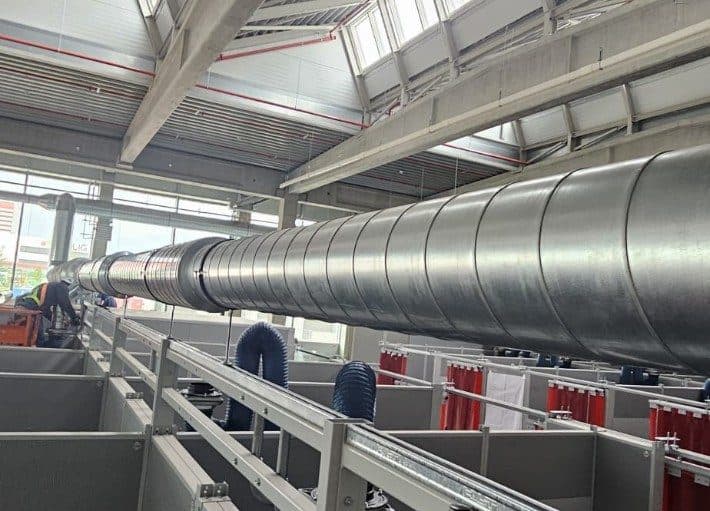
Dismantling, removal and dust
Old sections are cut and lowered in manageable pieces, and carried out along an agreed route. Plan the exit path, the storage area and the waste handling before the first cut.
Ducts hold dust. Work gently, close open ends quickly and clean the floor and surfaces below. In sensitive production areas, the site will say what level of cleanliness it expects.
Count on the old ducts being heavier or more fragile than expected. A short trial on one section shows how they behave.
Where the hall has sensitive products or processes, cover or protect them before work above them begins.
New runs: supports, transitions and connections
New ducts need suspended supports that match the structure above. Transitions between sections and sizes are fitted so the air path stays smooth, and connections to units and equipment are made with the equipment's own interface in mind.
Straight routing and coordinated transitions are easier to achieve when the survey is done well.
Check the structure that will carry the supports before the new ducts go up. If it cannot, the engineer or the site owner decides on reinforcement.
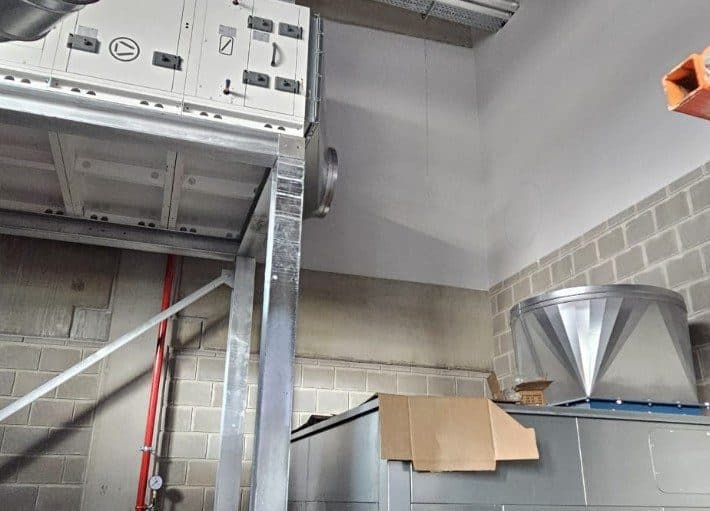
Sealing, leak check, handover and coordination
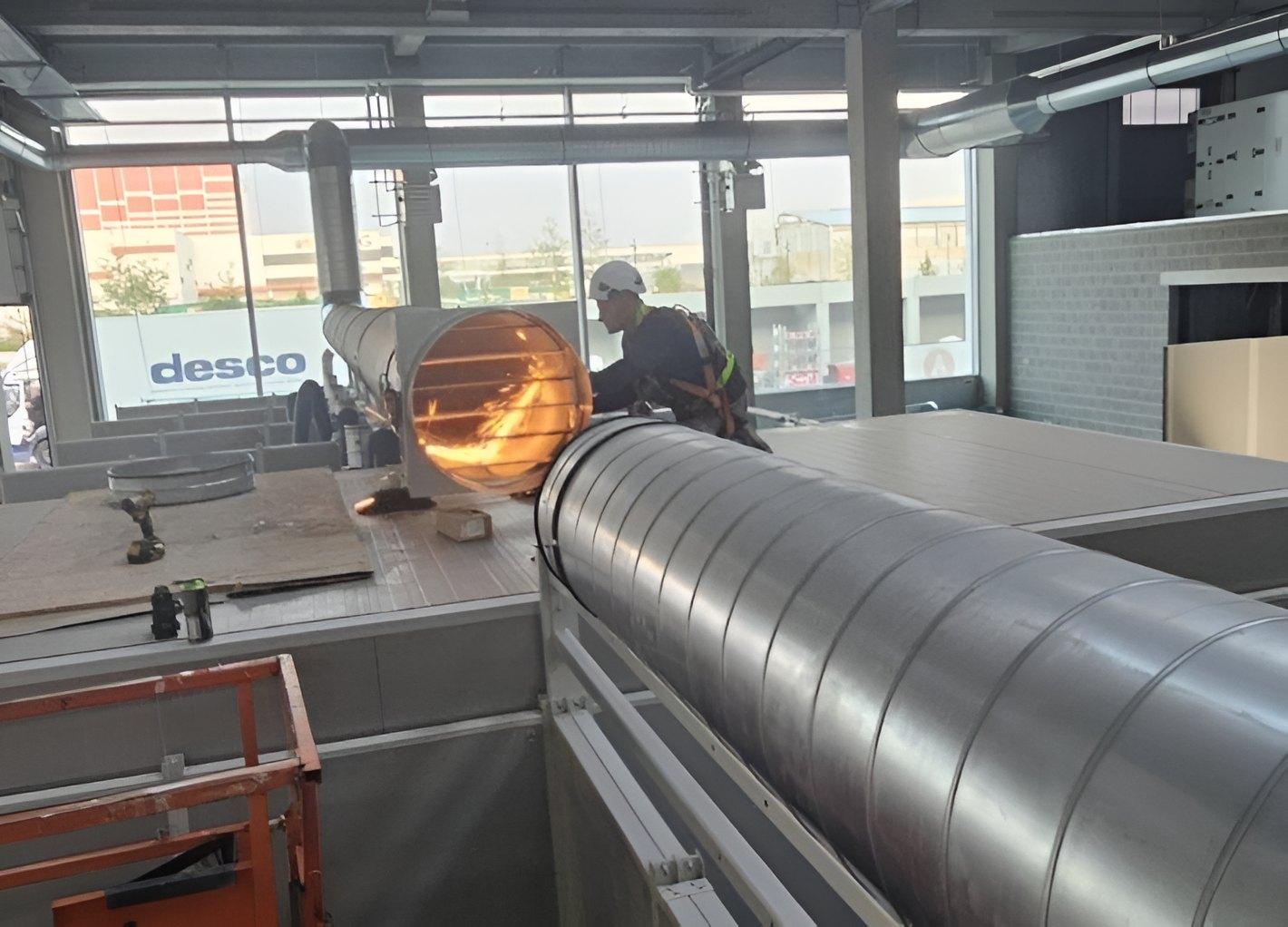
Joints are sealed and the system is checked for leaks before it goes back into service. The section is then handed over to the site, with the isolation removed in an agreed order. Permits, such as hot work or work at height, are closed out at the same time.
Other contractors often work in the same hall. I.G. Solutions installs and modifies ductwork, fits suspended supports and equipment connections, and coordinates with other trades above active workspaces. Send us the survey or a short brief and we will propose the phases.
Agree beforehand what the site accepts as a handover. A short checklist signed by both sides closes each phase and gives the next phase a clean start.
Frequently asked questions
Can ductwork be replaced without stopping production?
Often yes, if the work is phased. Each phase isolates a section, closes a zone below and has its own time window. The site decides what can be stopped and when, and the plan is built around that.
Why is lock-out/tag-out used?
It prevents a unit or fan from being started while people work on its ductwork. Each worker places a personal lock at the isolation point and removes it only when finished. The site defines who isolates and who confirms.
What permits might the site require?
Depending on the site, typical permits cover work at height, hot work, access to restricted areas and isolation of equipment. The client or safety coordinator tells you which apply and who issues them.